SOFF X · AIHujjatingizni AI yaratsinSovg'ani oling
Mahsulot tavsifi
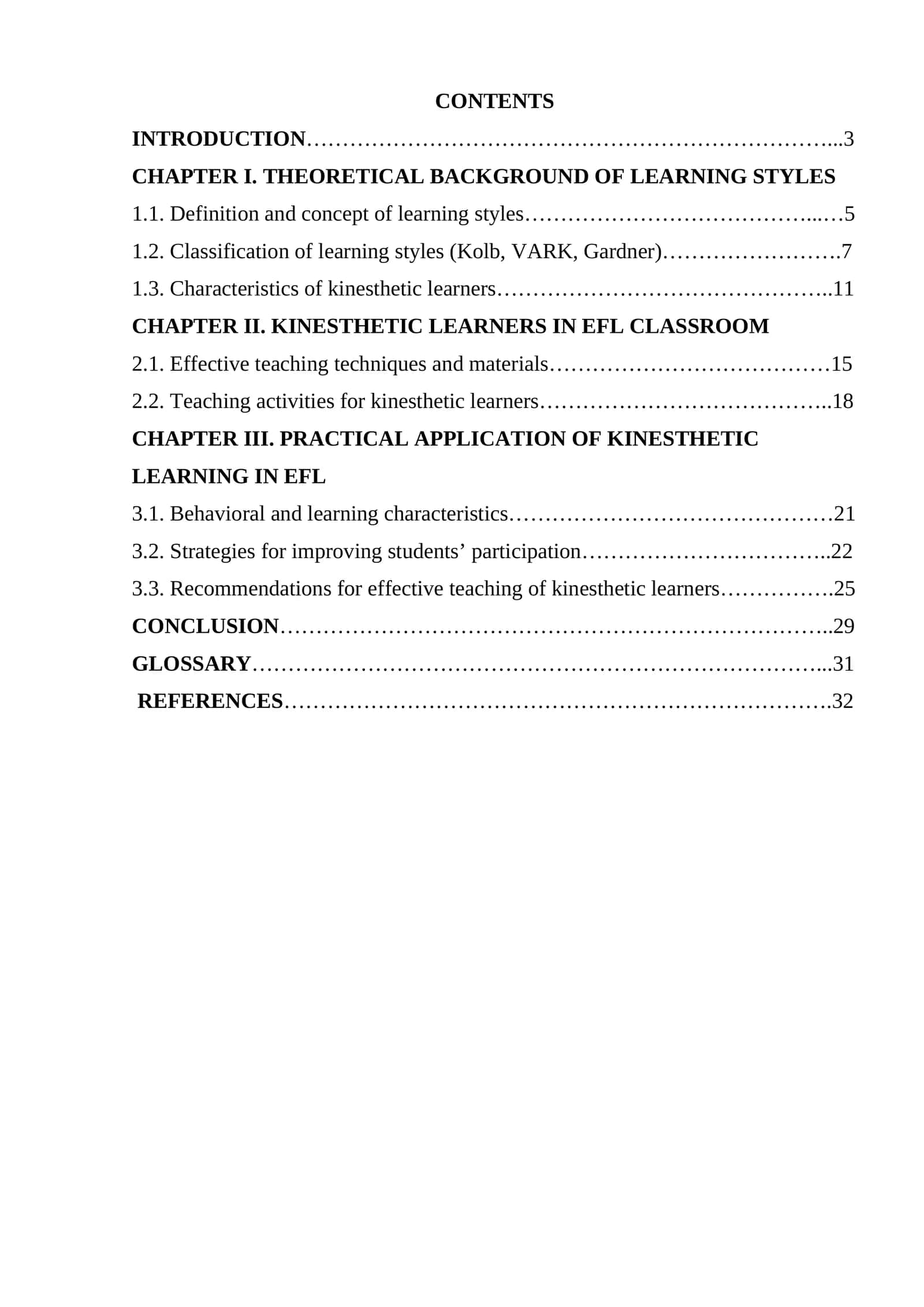
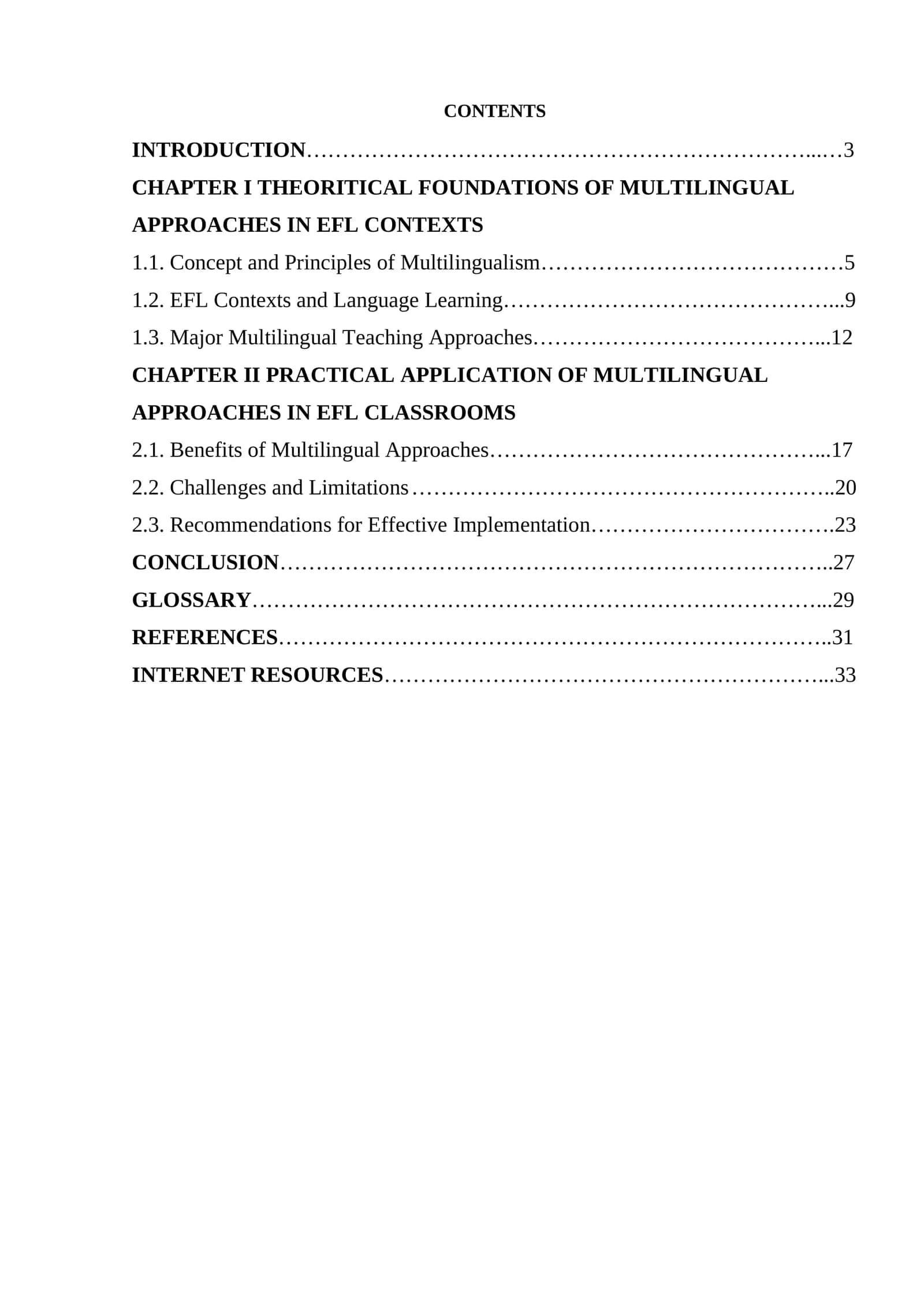
CONTENTS INTRODUCTION.. 3 CHAPTER I. THEORETICAL FOUNDATIONS OF MULTISENSORY APPROACHES IN EFL.. 5 1.1. Definition and Principles of Multisensory Learning. 5 1.2. The Role of Sensory Modalities (Visual, Auditory, Kinesthetic, Tactile) in Language Acquisition. 8 1.3. Benefits of Multisensory Approaches for EFL Learners. 10 CHAPTER II. PRACTICAL APPLICATION OF MULTISENSORY APPROACHES IN EFL CLASSROOMS. 14 2.1. Multisensory Teaching Techniques and Activities. 14 2.2. Use of Materials and Technology in Multisensory Instruction. 16 2.3. Challenges and Strategies for Effective Implementation. 19 CONCLUSION.. 22 GLOSSARY.. 25 REFERENCES. 27 The Internet Resources 28 INTRODUCTION The actuality and importance of the theme. In the era of globalization and the rapid development of digital technologies, the demand for high-quality English language teaching is increasing year by year. In accordance with the Resolution of the President of the Republic of Uzbekistan dated May 19, 2021, No. PQ-5117 “On measures to raise the activities of popularizing the study of foreign languages in the Republic of Uzbekistan to a qualitatively new level”, the study of foreign languages is recognized as a priority area for the development of the country's human capital [1] . However, traditional “chalk and speak” methods often fail to effectively engage a variety of students. Today, the issue of using innovative pedagogical strategies, such as multisensory approaches, is becoming one of the most relevant areas in the EFL (English as a Foreign Language) system. Modern neurolinguistic research shows that language acquisition is most effective when it involves several sensory channels—visual, auditory, kinesthetic, and tactile (VAKT). By engaging multiple senses, teachers can reduce the “affective filter”, increase long-term memory retention, and accommodate diverse learning styles. Therefore, the coursework on “Using Multisensory Approaches in EFL” demonstrates its great value in bridging the gap between cognitive theory and classroom practice. The purpose of the course paper. The coursework aims to identify, analyze, and develop effective strategies and practical recommendations for the systematic implementation of multisensory approaches in the EFL classroom to improve learner engagement and retention. The object of the study. The main object is the process of teaching and learning English as a foreign language (EFL) in various educational settings. The subject of the study. The subject of the course work consists of the theoretical and practical aspects of utilizing multisensory channels (Visual, Auditory, Kinesthetic, and Tactile) to enhance language skills such as vocabulary acquisition, phonetic awareness, and communicative competence. The hypothesis of the course work. If EFL teachers systematically integrate the VAKT (Visual, Auditory, Kinesthetic, and Tactile) model into their lesson designs, then students' information retention and engagement levels will significantly increase, regardless of their individual primary learning styles. The structure of the course work. The structure of the course work consists of an introduction, two chapters (the first focusing on theoretical foundations and the second exploring practical application and technology integration), a conclusion, a glossary, and references. [1] Resolution of the President of the Republic of Uzbekistan No. PQ-5117. May 19, 2021.
Muallif

- Hujjatlari
- 854
- Sotilgan
- 305